Friday, July 27, 2018

The Bottom Line with Autoimmune Protocol - 4 Steps to Health


Welcome to your easy-to-follow, what's the bottom line, what do I really need to know introduction to the Autoimmune Protocol. If you want in-depth research and scientific explanations, you will find plenty of information out there. This is for those who have no time or interest in the specifics of why. You only want to know what you absolutely have to do to pull this off.

Gotcha. Here you go:

1. Sleep. 

Sleep in or go to bed early, whatever you have to do to get at least 8 hours of sleep every night. I'm not saying do this forever. I'm saying do it for the next 30 days.

2. De-Stress.

Don't take the big project on. Give notice to the child or adult in your life that tends to bring with them a lot of burdens you usually take on. Breathe deeply, sit in silence, turn off netflix and youtube and take a hiatus from social media and the news. If you pray, have at it! Listen to classical music, take walks in nature, pet your animals. Whatever it takes to relax and unwind.

3. Eliminate

Probably the hardest part. Say goodbye (at least for 30 days) to: Gluten, sugar, processed foods, grains (including corn, rice and quinoa), legumes and nuts (including nut flours), seeds (including coffee), dairy products, nightshades (tomatoes, peppers, potatoes, eggplant, many spices), eggs, alcohol, stevia, cocoa, thickeners (guar gum and carageenan), NSAIDS (ibuprofen, aspirin or naproxen) or algae.

Let's pause here and talk. This is where I despaired. What other foods are there? This is EVERYTHING. No, it's not. I promise. There are adequate substitutions for these things, and you will be able to get by without them for a month. It goes faster than you expect it to, especially when you start to feel better. But what about NSAIDS? With my migraines and other pain, I survive on aleve. I can't live without it! But can I? Here's the thing about anti-inflammatory drugs: I did need them a lot at first. I had horrible headaches the first couple weeks into this diet. I took aleve several times, feeling like a failure but unable to cope with the pain. IT'S OKAY. The pain went away as the protocol took hold and started to work. I haven't needed aleve at all in quite a few days. Just do the best you can and be patient.

It is tricky the first week. I didn't even count my first week toward my 30 days because I messed up so much, realizing something was on the list I hadn't expected or not checking ingredients enough. Let yourself have room to mess up a few times. It's okay. You can even take these things out one at a time if you want. But when it's all said and done, go 30 days without them. That's the bottom line. And it's possible.

Eliminate supplements. What I didn't understand when I started was that I was going to be getting a lot more nutrients from my food on the protocol. My supplements were unnecessary, and thus made me nauseated and gave me headaches. Get your Vitamin D from daily sunshine (wait 20-30 minutes before you put on sunblock) and get the rest of your needs from fruits, veggies, meat, herbs and spices. 

As well, eliminate guilt. You don't have to be perfect. You will mess up. It's true that this protocol requires little-to-no cheating to work, but give yourself time to get used to it. It may take a few practice tries, and that's okay. As long as you are moving in a forward direction.

4. Add

Most AIP resources I used said to replace these things with expensive and hard to find items like cassava flour and tigernuts. Don't worry about either of those items. You can get by without them, and the truth is, I think I was sensitive to both of them and my body continued its autoimmune response because I added them in. Here are a few things you'll want to add to your pantry or fridge: Coconut milk (Careful, most inexpensive brands have guar gum. This can be EASILY homemade - recipe in the next post), coconut yogurt, tapioca and arrowroot flours, beef gelatin, carob powder, nutritional yeast, bone broth.

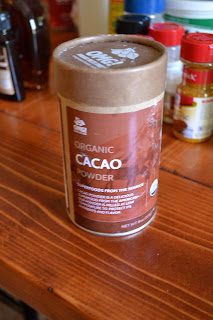
Here's what I found helpful and affiliate links to the products: (*NOTE: As far as I can tell, carob powder and cacao powder are the same thing. I'll let you know if I find out differently!)



(I've been tweaking a recipe for bone broth and these noodles that tastes like Ramen soup.)


Fruits and Veggies: If you haven't been eating fruits and vegetables, it's time to start. They started tasting much better to me once my addictions went away. I love avocados, spinach, mixed greens, broccoli, cauliflower rice, asparagus, and leeks. Onions and garlic flavor otherwise bland dishes. Enjoy berries and fruit in season. Bananas are a new favorite part of my diet - when I was doing keto, I wouldn't have considered eating a banana. 

Meat: I found I had to be careful with poultry. I am avoiding it for now. I eat grass-fed ground beef and beef sirloin (you may be able to find more grassfed choices. I shop at Aldi mostly so the selection is limited.) I also eat a lot of salmon, cod, tilapia and tuna. Prepared correctly, these are tasty choices even if you previously thought you didn't like seafood like me. 

Bread: If you are used to a lot of bread, even gluten-free or paleo bread, this will be your biggest adjustment for the next month. I have tried a couple recipes. (I was pretty obsessed with these dinner rolls the first couple weeks) and now I live on my own version of these crackers that I will share with you in the next post. 

Spices and herbs: Admittedly, it's a short list. But you can do a lot with these additions. I found a great recipe for taco seasoning that actually has a bit of a taco taste to it. I'll give you my own version in the next post. Your go-to spices for the next 30 days: Onion powder, garlic powder, cilantro, parsley, thyme, rosemary, sea salt, ginger, turmeric, oregano.

Drinks: A lot of people have a hard time coping with the thought of giving up coffee, soda or alcohol. Mostly, we have this response because of our addiction to them. It's a good idea to let your body rest when it gets to the point that it needs something to survive. But there are fun replacements. For coffee - try a mix of dandelion root, chicory root (I just get the tea bags) and carob powder for a coffe-ish drink that tastes great. And I love my sparkling water. So many different varieties and flavors, even at Aldi where I shop. When you lose your addiction to sugar, it tastes just as refreshing as soda. And while I'm looking forward to my first glass of wine in a few weeks, I'm not desperate for it. It can wait, because right now I'm healing.

Sweets: There are actually a lot of recipes for AIP sweets out there. Some work, some don't. I've tried a few and found two so far that work for me, these  blueberry muffins and these cinnamon cookies. I'm also working on finding a good carob sweet for a chocolate replacement.

One other thing to add to your daily routine if you don't already - exercise. As much as we hate the thought when we haven't been in the habit, moderate exercise will speed up the healing process. And I've found that once you get in the habit, you enjoy it and look forward to it. Our family joined the local YMCA for the summer and have been having a blast working out together and swimming at the pool. Likewise, if you have a dog you have a perfect excuse, like I do, to take to the streets with your tunes for a vigorous daily walk. 

There you have it. The basics for beginning the Autoimmune Protocol. If you get these things right, you'll see something happen. But give it time. I was convinced I was only making myself sicker for two good weeks before I started to feel much better. Be patient and forgiving with yourself and pursue it until you get it right. 

Next post: 10 Stress-Free Recipes that will Save your Life during AIP Elimination

Is Autoimmune Protocol really for Me?


If you have followed this blog for a while, you know that sometimes I post about health issues and answers. There have been times before when I thought I had found all the answers and would never have to struggle with autoimmune disease again. I've come to a more realistic outlook, seeing that these struggles have a way of returning. That being said, I think I've made a breakthrough.

I am coming out of my blogging hiatus because my health is in the process of turning around, and that's worth mentioning. It's also worth providing information to others who may be in need of the same answers. It's not an easy answer, but my goal is to make it simple and straightforward for you.

By you, I mean those of you who struggle with autoimmune disease. Rheumatoid Arthritis, Crohns, Ulcerative Colitis, Lupus, MS, Hashimoto's or Grave's, Psoriasis, Type 1 Diabetes, and many, many other disorders that plague so many of the modern population. Those of you who have seen multiple doctors over a period of years and have had no answers or long-term solutions to the symptoms that cripple you. I know you well, because I'm one of you.

This has been my life since childhood. As an ophthalmologist told me several years ago when he saw me for a recurring case of iritis, "You have to be really careful, because your body wants to be in a constant state of inflammation." And it's true. No matter what I've done, from gluten free to paleo to THM to keto, I can't seem to stay on top of my health for long. 

It's the most frustrating dilemma I've ever faced. I know what it's like to deny yourself most of the food everyone around you is eating, to walk and work out to the point of exhaustion, and still have the scale creep up on me or the symptoms return out of nowhere and knock me over again.

It would be easy to give up.

For years, I have had the recurring thought that this all must come from one place. All these symptoms, all these different diseases and syndromes must have a common source. That's why it frustrated me so much to go to doctors, because the current medical protocol for autoimmune disease is simply to visit many different doctors who prescribe medicine for the vast array of symptoms. Alternately, you might be offered immunosuppressant drugs which come with a whole new set of side-effects and concerns. Neither of these solutions were acceptable to me. But I didn't know where else to turn. I had even been seeing an integrative doctor for several years, but it was almost the opposite of the traditional medical approach. She overwhelmed me with information to the point where I couldn't wade through the mud to find the answers I was hoping she'd give. She definitely never told me simply that I have an out of control autoimmune response, and that there is a simple approach to heal it and move on with your life. An approach I can revisit anytime I need to do so. 

I just happened to hear about Kelly Clarkson losing weight recently and claiming that she didn't do anything but eliminate a few foods from her diet, and that her autoimmune issues had been resolved. I didn't believe it was quite that easy, but I researched the book she had read, called The Plant Paradox.

It seemed a little fantastic, but I grabbed on to one aspect of it that made sense to my brain. Plants have chemicals that resist being eaten under certain conditions. And if your system is already a train wreck, this chemical (called a lectin) will easily send you spiraling. So I made a note of the things I was eating that would have a high amount of lectins, like tomatoes and peppers, and I stopped eating them to see what happened.

Never one to under-do anything, I kept researching and eventually came to the Autoimmune Protocol. It was somewhat related to Plant Paradox, only way more involved. I had heard of AIP before, but I'd never been willing to take a closer look because it sounded SO. HARD.

I'm not going to sugar coat it (because sugar is on the no list!) because you need to be prepared for the truth. Autoimmune Protocol IS hard. When you first start it, it seems impossible. Your body, while suffering under the effects of many foods, demands those very foods and craves them and makes your life miserable when you stop eating them.

Here's the thing. If you want to be able to live your life without autoimmune responses or the side-effects of drugs, this is the end of the road. It's this, or survival mode. And who really wants to live long-term in survival mode? And while it is hard at first, after two or three weeks, your body accepts it. Calms down. Starts to feel better. And at that point, you realize it wasn't really you saying you could never eliminate so many things from your diet. It was the addiction you had to foods that were hurting you. Consider this approach rehab. You will feel better eventually.

I'm planning a couple more posts. One will be an introduction to AIP. I intend to make these posts easy to follow. I'm not going to get into complicated science and explanation. From what I've found, that's the only information available on the subject. I will bring it home, and only tell you what you need to know. You're busy. You have a life. You don't want this to become all you think about or do. So I'll make it simple. What do you have to change? What do you need to eat? 

The second post will be the recipes that have saved my life and helped me persevere through the hardest part. I will share the snacks and meals that have settled my cravings and helped me realize there is good food apart from junk and convenience food.

Bottom line - how does an average person survive AIP? Truth be told, we may start out average, but when you make a decision to go off the beaten path and do something very few are willing to do, you're making a choice that could benefit you for the rest of your life. Just like Robert Frost said:


Monday, April 30, 2018

MY BROTHER THE KING

MY BROTHER THE KING

Their time is marked by oppression, their home by conflict. Within a humble Nazareth dwelling, four siblings share a secret. Their people pray for a freedom fighter who will shake off their bondage - the great M'sheekha. But he's already here, and he's not who anyone expected. 

Take a journey into the stories of the brothers and sisters of Jesus. Ponder the experience of growing up in the same house as God. Follow him on the road of ministry. Stand back and see him give his life - a ransom for many. 


Even the ones who didn't believe.


Nearly fifteen years ago, I knew I wanted to tell the story of Jesus through a fresh perspective. I didn't realize the long road ahead, and the many tries and failures over the years to get it right.

What my vague original idea became was the story of four Jewish siblings, Ya'achov, Y'hud, Talia and Hannah, sons and daughters of Joseph and Mary of Nazareth. They are as common and poor as the lowest of their time and place, with one exception. Their brother is the promised king.

What would have Jesus's childhood home looked like? Would it be peaceful because Jesus lived there? Perfect? Idyllic?

The more I thought about it, the more research I did into that society, the more certain I was that it couldn't have been that way. Jesus wasn't there to do what his people expected. Jesus wasn't about following the rules. Jesus was radical. And to a lowly Jewish household and community, he stood out too much. The Bible clearly explains that he had enemies ... even in his own family.

So these many years later, I am ready to share their story. I hope it will inspire you to go back to Scripture with your heart engaged, ready to see Jesus for who he was and is. Not so much the wise, compassionate teacher sitting out on the hill, but the revolutionary, bleeding divine blood up the hill of Calvary to buy the freedom of an entire universe.

Let's not think of him as any less than what he really is, even if it scares us, even if it isn't comfortable. Let's meet him at that hill and see what he is able to do in us as a result.

Let us not live in unbelief any longer.

MY BROTHER THE KING is available in print or electronically for your phone, kindle or computer. Please don't forget to leave your review on Amazon. It doesn't have to be long, but the more reviews there are, the easier it will be for potential readers to find it. Find it HERE.


Tuesday, October 10, 2017

The Little Things

It’s strange to find myself at a loss for words. I lost my own father in 2014, and I have the familiar denial again, that my father-in-law isn’t really gone. Surely he’ll be back. But he is gone, and I have an uncomfortable feeling that I took him for granted.

He wasn’t the kind of person to push himself on anyone. In fact, I can remember giving him a hard time about him not wanting attention or gifts. He was frugal, he saved rather than spent, he didn’t buy extras for himself. And yet the same man would show himself immensely generous if someone was in need. I see it now – he preferred to store up his money so he could use it on others. It made him happy.

Isn’t it always the little things that become magnified when a person leaves this life? The chair he liked to sit in by his condo is still there, the ground around it covered in bird seed. The little homemade snow globe my son made a few years ago still sits on the top of his dresser. His calendar is marked to help him remember to take care of his granddaughter when she gets home from school. He had a bag of dog treats ready for the next time he would have taken care of his granddog.

I’m not saying my father-in-law was perfect. He had flaws just as we all do, though age had refined him and created something peaceful and kind in his spirit that made him easy to be around. I guess I’m saying I wish I could have seen the wonderful part more clearly before it was time to say goodbye. I wish I’d hugged him a little longer or spent a little more time sitting across from him on the couch and talking about nothing important.

I struggle to take time to appreciate the little things. I’m not one to sit on a chair in the yard and feed the birds. I hate small talk. I always want life to be big, epic and profound. But how much closer could I have been to my father-in-law if I’d tried things his way? If I hadn’t been so impatient and busy, and I’d just taken the fleeting moments he had left and sat by him?

There was a week several years ago that he came and spent with our family. I enjoyed having him there, but there was one day when I was trying to get everything accomplished and I was finally on the elliptical, getting exercise out of the way. He followed me into the room with his coffee and just sat there as I exercised. At the time I wished he would find something else to do. It felt awkward. Now I see it completely differently. He was trying to be part of my world. He was trying to be present even though I was overly busy. How I would change my attitude if I could relive that moment again!

As I was after my own father died, I’m regretful. But I’m hopeful that my wrong perspective could help someone else make changes in relationships before it’s too late. If you have a person in your life who thinks opposite of you, embrace the differences. Learn to appreciate them. Imagine that person gone from your world and truly consider what would suddenly be missing from your life.

Howard … Dad … I do love you. I wish I’d told you more. I wish it hadn’t taken seeing you on your deathbed to realize how special you are. I’m sorry I took you for granted. I’ll remember you, and your simple, wonderful ways, and make sure my children remember the precious treasure you really were.

So, as my children keep saying, I wish I had one more time to sit and talk to you. Even saying that, I know it wouldn't be enough. It would never be enough. It goes back to that inevitable truth - we weren't made for death. It's not a natural state. I'm so thankful that someday death will be defeated and banished forever. May we all be ready for that day.

Goodbye, my second father. I will miss you.

Wednesday, June 28, 2017

Results of Blackout 2017

The Shisler family Blackout 2017 is drawing to a close. It was an interesting month. We did well in some areas and others were a challenge. We've definitely learned some things.

We stuck to the no electronics the whole month. There was one or two who shall remain nameless that sneaked some phone time or did some unnecessary "work" on the computer, but overall it was a pretty quiet month. At first the kids didn't know what to do with themselves, but they started playing more games and undertaking creative endeavors. 

Drying laundry on the line didn't go well. I tried it once but realized quickly I didn't have enough space on my line for the amount of laundry I do in  a day. We did some towels and sheets on the line, but I admit we gave that up pretty quickly.

We are still washing dishes by hand. I have definitely learned to appreciate my Bosch dishwasher. I had no idea how much time it saves me. I'm not going to take it for granted anymore!

We ate more simply as well and tried some new dishes. We did more of a "Mediterranean" diet, which worked pretty well for everyone. 

I noticed that we did better the first half of the month than the second. Especially as our vacation approached, I started buying things on Amazon again, using it as my excuse. I think I need some more work on the "no spending" in the future. I did successfully avoid buying my son a fidget spinner. He asked approximately forty thousand times a day.

I made it well over a week without air conditioning, but it probably wasn't fair because the weather has been unseasonably cool and pleasant. I got uncomfortable fast for the few days that were hot, and the air went right back on. I believe if we had to live in survival mode that would be the the thing that I would have the hardest time with. I don't like being too hot. 

We did composting most of the month and didn't use paper or plastic. I noticed the garbage can wasn't as full as usual, and I was happy about that. 

If I were going to grade us, we'd probably get a C- for our effort and attitudes this time. But I'm told I'm a tough teacher. I think this was a good introduction to a simpler lifestyle, but it wasn't perfect. I'm thinking we are going to need to revisit this idea again.

We played a lot of board games, spent a lot of time outside, went to VBS, slept more, talked more and took more walks. And those were probably the best reasons to pull the plug. I spent more time studying the Bible and praying, and I managed to write about 50,000 words during the month of June, which is unheard of for me. I guess I really do get distracted by the internet. I may have to give myself some permanent rules about work time.

Here are some pics from the past month. Thanks for tuning in!


built from scratch by my 13-year-old daughter


playing "co-op"

Washing dishes and shenanigans

Monday, May 29, 2017

Blackout 2017


Today is Memorial Day. We tend to think about this as a day off where we get all the chores done we've been putting off. Or a day where we visit family or take a trip. Or we think of it as the kickoff to summer.

But we know that first, this is a day to remember. Remember sacrifices made on our behalf. We remember that countless lives were laid down so that we could be so free we can work on the lawn or go on a trip or cook out or do whatever we want. They died so we could have these freedoms.

Living in a world and even in a country that doesn't seem to have as much appreciation for the sacrifices given for us, I have to wonder how much longer it will last. Our nation no longer acts like grateful upholders of freedom, rather, entitled, easily offended, distracted holders of freedom.

Because of what I see happening in the world, and even with the attitudes and entitlement of my own children and my own heart, our family is adopting a plan for June that I hope will bring our motivations and goals somewhat back into check. It's a scary plan. It doesn't sound especially fun. I'm sure we're going to have challenges in the next month as we try to make it work. But deep down within me, I feel like my children need the opportunity to realize how much we take for granted. And I want them to know what to do if freedom, comfort and ease becomes a thing of the past.

So this month, the Shisler family will be conducting a Blackout. Not a literal blackout, with no electricity or running water or grocery stores, etc, but a first-time practice Blackout.

Here's our plan:

Shisler Family Blackout
June, 2017

For the month of June, we will be unplugging and reducing our use of conveniences and electricity. The reasons for this:

1.       To honor God by admitting our comfort and entertainment may be distracting us from hearing his voice, and to pray and ask him to speak in the stillness.

2.       To learn to be more conservative in our use of power, food, conveniences and entertainment. These things may not always be around, and we need to know how to live without them.

3.       To remember that sacrifice reminds us of how much Jesus gave up for us. He left HEAVEN to live here in a very rough time and died a very rough death on our behalf. While we have been blessed to have so many comforts, it’s not what this life is about and Jesus was the one who showed us what is more important.

4.       To learn how to get along. We will use this time to focus on relationships and finding common ground without the distractions. We will focus on learning to be quiet without electronics.

5.       To learn how to work hard to survive. This may come in useful one day.

What we will be doing differently:

1.       No electronics. No computer (except for specific work and school tasks), no tv, no phones (except for calls and texts with friends and family.) Exceptions: listening to music or Adventures in Odyssey, listening to the Bible read aloud or an audio classic book, reading on the kindle. (limit to one hour a day.)

2.       We will be drying laundry on the clothesline when the weather is good. Everyone will help.

3.       We will be hand washing dishes, and reducing our use of paper and plastic. Everyone will help.

4.       We will not be making any purchases besides food and any emergency necessities that come up. No purchases for fun or convenience.

5.       We will try to live without air conditioning for at least a week, or as long as the weather does not get extremely hot. If it does, we will keep it set to 78 or above to conserve energy.

6.       We will not drive more than necessary or for convenience.

7.       We will make compost of food waste rather than throw it away. We will reduce our waste.

8.       We will conserve our use of water and electricity.

9.       We will eat less red meat, more vegetables. We will try to make our own bread and conserve our use of the stove and fridge. (maybe cook mostly on grill?)

1.      We will spend our extra time organizing and decluttering, getting rid of things that could be helpful to others.


1.      We will do at least one activity that is for the good of others less fortunate.


I     If you are interesting in joining us for the Blackout in June (or another time) feel free to use any or all of these ideas.  I'll be posting again in July about how it went and what we learned. Let me know about your experiences and ideas in the comments, and thank you to all who serve our country so sacrificially!


I

Friday, April 14, 2017

Good Friday?


On this morning, only a couple thousand of years ago, a man waited below the house of the high priest in Jerusalem.

A prisoner. Surely many prisoners had been housed in that dungeon, dreading the moment they were handed over to Rome for execution. Some may have deserved their fate, some may have been victims of a corrupt system governed more by rule-following and prestige than by their law they claimed to love so dearly.

But this prisoner was different. He was truly innocent, not only in matters of the law, but in all matters. He was the perfect Creator of the universe, captive only to his love for his people and to his promises made from the beginning of time.

But why do we call this day Good Friday? The day our Lord was betrayed by friendship’s kiss cannot be good. The morning after a night of slandering, the morning dawn brought cruelty in the form of beatings, mocking, and a sentence of death can't be good. Those who had followed him and praised his teaching and even watched him raise the dead to life … now scorned him. Disowned him. Left him alone without a single soul willing to stand up for him and risk the same fate. How can it be good that he suffered, and that he suffered alone?

His disciples couldn’t even stay awake to pray with him the night before such an evil, terrible day. 

So why in the world would we call this day “good”? What could be good in such tragedy and betrayal? How could we celebrate a day that found humanity at its worst, violently attacking and killing the very being that gave them the breath of life and formed their bodies within their mothers’ wombs?

We call it good because it is our only hope. We call it good because there is no other way, not by sacrifice or self-discipline or scientific exploration or by the pursuit of world peace … THERE IS NO OTHER WAY we could be saved from our sinful souls.

It is a good Friday when I know that cross, meant for shame and torture and death, is a glorious trophy to exchange one day for a crown I don’t deserve. I can call his suffering and death good because he endured every single moment until it was finished … for me. Because he loved me. In my sin and ugliness and weakness and failure, he loved me.

And we can call it good because it wasn’t just one person he loved, but every one of us. His sacrifice was accomplished ONCE FOR ALL. Anyone who will turn from their sin and look to his cross for forgiveness and new life may come and receive freely the abundant gift of eternal life. No questions asked. No qualifications or conditions. The price has been paid. Cursed humanity has been ransomed.

Only come. Receive. Have faith.

And Friday is good only because of one enduring, eternal truth. Friday is good because Sunday is coming. Death didn’t keep him. The grave was forced to give him up. Friday is good because it was the only way we would know that our Savior is strong enough to take on the enemy we could never, ever conquer on our own.


Jesus is alive.

The Personal Nature of Holy Week

 HOLY WEEK IS PERSONAL. This is Holy Week. Depending on your background and upbringing, this may mean different things to you. Perhaps you t...